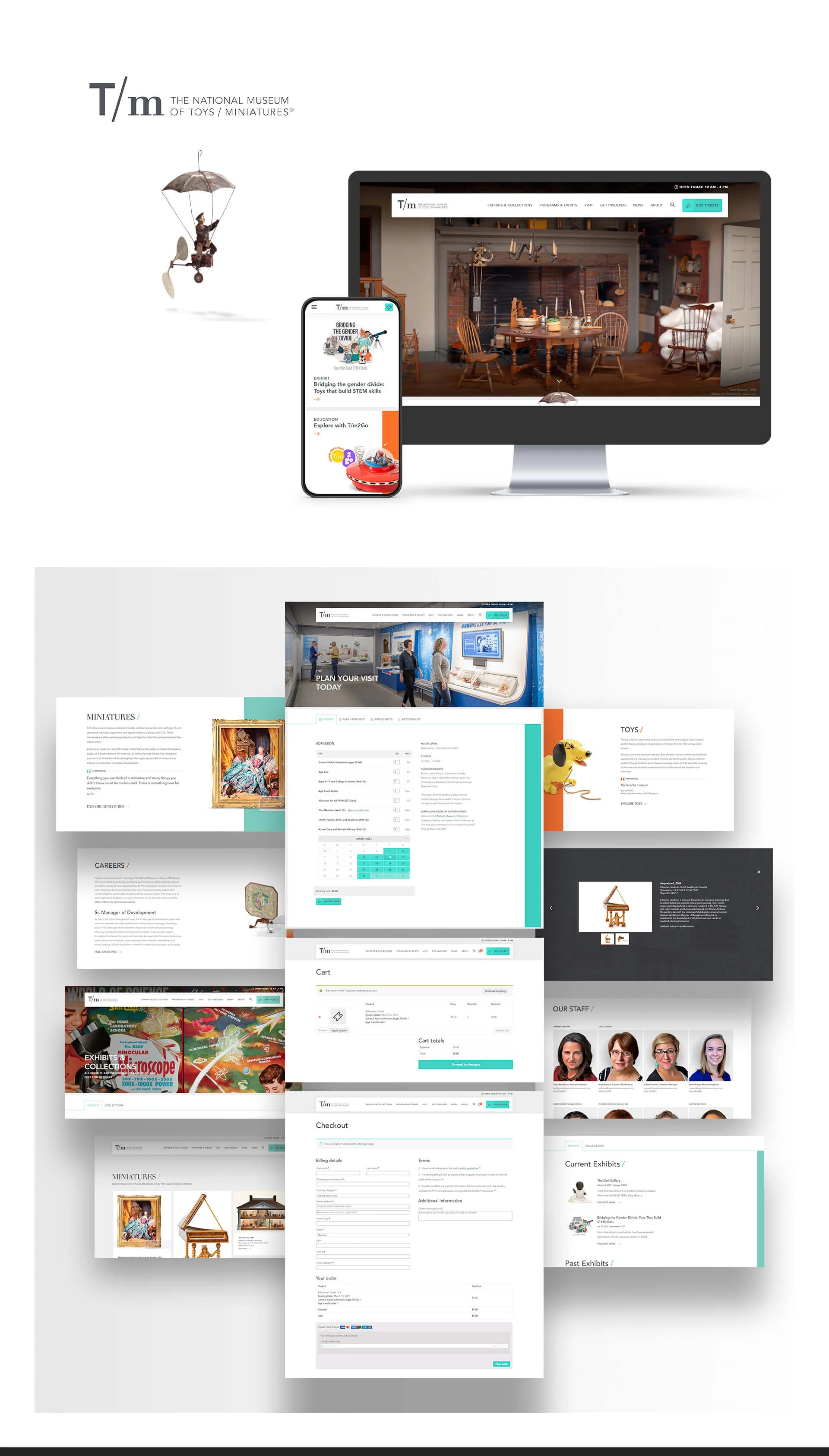
Toy Miniature Museum
Project overview
Project: Website and visitor experience redesign — clarify brand, improve discoverability, deepen community engagement, and increase memberships/donations
Role: Senior UX Designer — led research, information architecture, content strategy, interaction design, prototyping, usability testing, and dev handoff
Timeline: 8 weeks (discovery → research → prototype → test → launch)
Team: Museum Director, Marketing Lead, Volunteer Coordinators, Front-end Dev, Content Strategist, Events Manager
Context Toy Miniature Museum (T/m) offers highly curated miniature exhibits and hands-on experiences. The museum needed to differentiate itself from general museums and family attractions, be discoverable for Kansas City “fun” searches, and turn one-time visitors into repeat attendees, members, and donors through social engagement and community programming.
Problem
Low discoverability in local search and tourism listings.
Visitors unclear what makes T/m unique versus general museums or family attractions.
Limited repeat visitation and weak membership/donation funnels.
Underused social and event strategies to build a returning community.
Goals & success metrics
Improve local discoverability for queries like “fun places in Kansas City,” “museums,” and “family attractions”
Increase website-driven ticket sales and event RSVPs by 30% in 90 days
Grow memberships +20% and donor starts +25% in 6 months
Boost social shares from onsite visits (target +40%) and repeat visit rate by 25%
Create a CMS-driven content/event pipeline for ongoing community engagement
Approach
Stakeholder alignment
Workshops with museum leadership, events, and volunteers to prioritize audiences, signature programs, and must-have messages.
UX research
Visitor interviews and ride-alongs at the museum (families, hobbyists, school groups).
Audit of local tourism sites, SEO presence, and competitive attractions.
Analytics review of current site traffic, referral sources, and social share patterns.
Synthesis & personas
Created 4 personas: Local Family Seeker, Miniature Hobbyist, School Program Coordinator, Weekend Tourist — mapped goals, decision triggers, and preferred channels.
IA & content strategy
Reorganized content into clear audience entry points: Visit (plan trip & tickets), Explore (collections & stories), Events & Programs, Learn (school field trips), Support (membership & donate).
Defined content types: exhibit stories, behind-the-scenes, member spotlights, event calendar, and shareable photo prompts.
Prototyping & testing
Desktop & mobile prototypes tested with target visitors focusing on findability, ticket flow, event RSVP, and social sharing prompts.
Implementation & measurement plan
SEO and schema updates, CMS templates for event publishing, and analytics events for discovery, share, membership, donation flows.
Research findings (high level)
Discovery gaps: T/m was not well-optimized for “things to do” or family attraction queries; listings lacked rich snippets and local metadata.
Decision drivers: families and tourists prioritized clear hours, pricing, parking, accessibility, and easy ticket purchase. Hobbyists wanted deep collection stories and provenance.
Social behavior: visitors are likely to share unique photo moments when prompted and given hashtag/frame suggestions.
Membership triggers: exclusive events, behind-the-scenes access, and member discounts drive sign-ups more than generic donation asks.
Design solutions
SEO-first content rework: landing pages optimized for “Fun in KC” queries, structured data (schema.org) for events, tickets, and organization, and targeted local copy.
Audience-first homepage: clear CTAs for Visit, Events, Learn, and Support with quick info (hours, ticket CTA, parking) visible above the fold.
Event & community hub: calendar, RSVP flow, and member-only events module to promote repeat visits.
Exhibit storytelling: modular story cards with high-quality imagery, curator notes, “did you know” microfacts, and deep-dive pages for hobbyists.
Membership funnel: benefits-first membership page, tiered perks, streamlined signup, and immediate digital welcome pack (shareable content).
Social-enabled visit flow: onsite photo prompts, printable/QR “share this moment” cards, pre-populated social share text and hashtag, and easy in-ticket emails with social links.
School & group booking: simple inquiry form, downloadable chaperone guides, and curriculum-aligned program descriptions.
Measurement: events for ticket purchase, RSVP, membership start, donation, social share, and repeat visit flag (UTM + CRM match).
Measured / projected outcomes
Organic local search visibility: target top-3 local SERP for “fun places in Kansas City” within 3 months (SEO work).
Ticket sales & event RSVPs: +30% in first 90 days (target via streamlined ticket/RSVP flows).
Membership growth: +20% in 6 months via member events and immediate welcome content.
Social shares: +40% increase by adding in-exhibit prompts and pre-filled share flows.
Repeat visit rate: +25% over 6 months through event programming and member benefits.
Deliverables
Information architecture and content map
High-fidelity desktop & mobile prototypes (home, ticket flow, membership page, event hub)
SEO & schema implementation checklist and sample meta copy
Social share toolkit (in-exhibit prompts, QR cards, pre-written share text)
Event CMS templates and publishing guide
Usability test report and prioritized fixes
Analytics event map and KPI dashboard for tickets, RSVPs, membership, donations, and shares
Handoff package: component specs, accessibility notes, dev tickets
Learnings & impact
Positioning T/m as a distinct, shareable experience (tiny worlds with big stories) increases both discovery and social amplification.
Immediate membership value (events + behind-the-scenes) is more effective than generalized asks for driving sign-ups.
Small, in-venue social prompts substantially increase share rates and organic reach.
Structured data and local SEO are vital for being surfaced in “things to do” searches and travel listings.