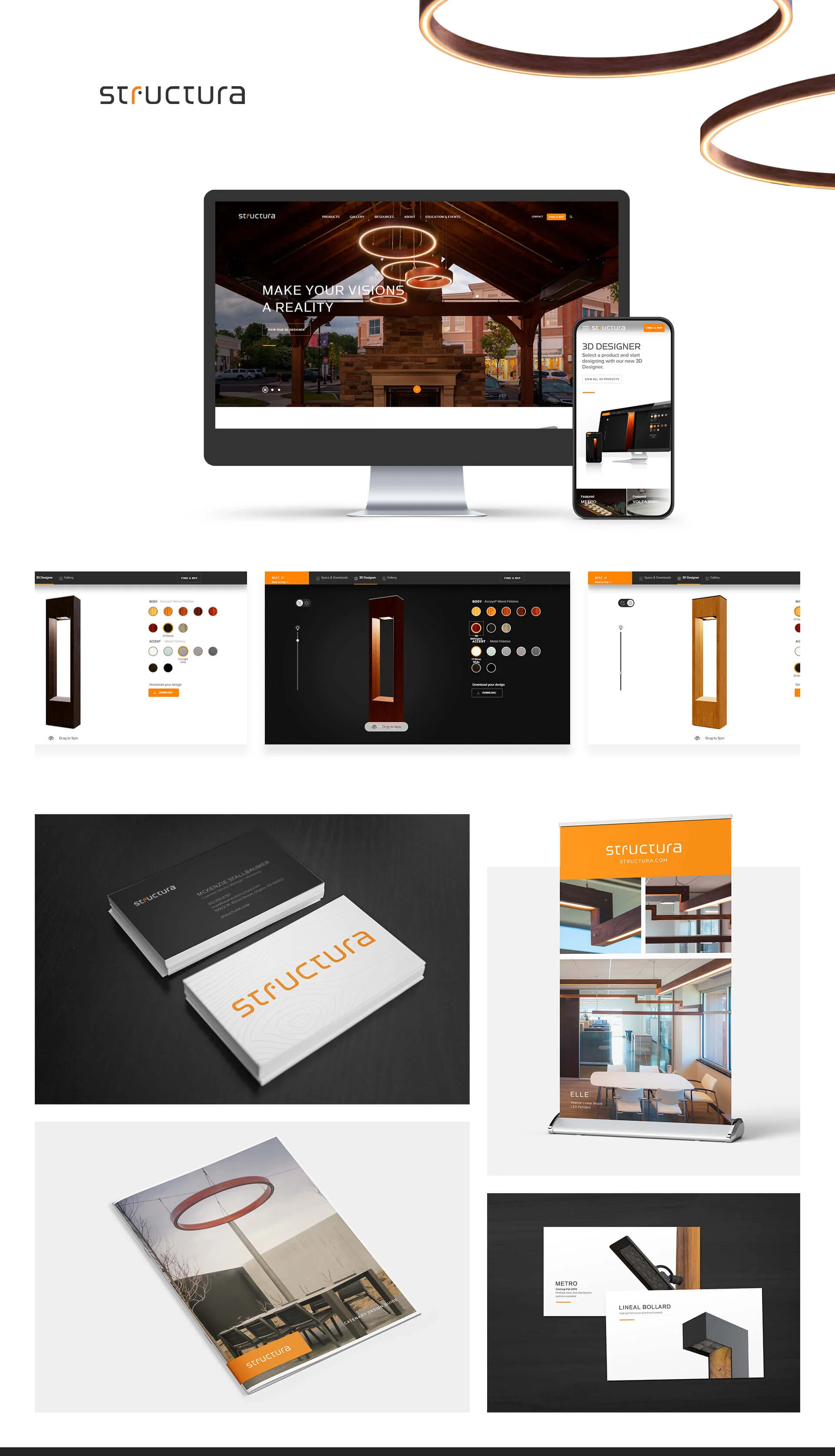
Structura
Project overview
Project: Website redesign — product-forward site and specification flows to showcase Structura’s wood + metal products and catenary lighting systems
Role: Senior UX Designer — led research, IA, interaction design, prototyping, usability testing, and handoff
Timeline: 8 weeks
Team: PM (Ashley), XD collaborator (Dan), Content Strategist, Product Manager, Front-end Dev, Marketing
Context Structura is a design-forward manufacturer known for wood-and-metal combinations and catenary lighting systems. Brand strengths include craftsmanship, Midwestern roots, family orientation, and strong customer service — but awareness of Structura as the maker of those products is limited. The site needed to connect users deeply to Structura products so they “won’t compromise” and to surface product detail and specification workflows for designers, architects, and procurement.
Problem
Users saw beautiful imagery but didn’t identify Structura as the product source.
Product specification and procurement workflows were unclear and effortful.
The product range was perceived narrowly (a “pole company”), limiting consideration for broader projects.
Recruiting top talent required a clearer employer brand and product storytelling.
Goals & success metrics (project brief)
Connect users so deeply to Structura products that they won’t compromise (primary success statement)
Improve product identification and brand attribution
Make specification effortless for architects, designers, and installers
Increase awareness across full product range (not just poles)
Attract higher-quality job applicants
My approach
Stakeholder alignment
Workshops with Marketing, Sales, Engineering, and Production to surface unique material story, certification needs, and spec constraints.
UX research
Buyer interviews: architects, landscape designers, electrical contractors (recruit 12–16).
Internal interviews: Sales, Customer Service, Fabrication leads.
Content audit: imagery, product pages, spec sheets, downloads.
Competitive review: material-focused manufacturers and specification-first sites.
Synthesis & personas
Created 4 personas: Spec Architect, Landscape Designer, Procurement Manager, Install Contractor — prioritized tasks and decision criteria.
IA & content strategy
Product-first taxonomy (by use-case + material + system) with clear brand attribution on imagery and galleries.
Two primary flows: Inspiration → Product Detail → Specification (download / request sample / start pilot).
Prototyping & testing
High-fidelity desktop and mobile prototypes; moderated usability tests (5–7 participants across roles).
Iterated on spec workflow, gallery attribution, and sample request modal.
Handoff & measurement
Delivered component specs, copy blocks, PDF spec templates, and analytics event map for tracking spec starts and sample requests.
UX Research — methods & key findings Methods
Stakeholder interviews (6)
Buyer interviews (12–16; architects, designers, contractors)
Content & competitive audits
Moderated usability sessions on prototype (12 participants)
Analytics baseline review
Findings
Attribution gap: Users loved images but couldn’t identify manufacturer; many assumed imagery was editorial or reseller.
Specification pain points: Spec sheets were hard to find and not contextualized to project needs (mounting, finish, load ratings).
Decision drivers: material authenticity, ease of specifying (cut-sheets, BIM/CAD assets), installation details, and available finish/price ranges.
Inspiration→spec drop-off: High intent during browsing but friction when moving to technical details or contact — forms too long and unclear next steps.
Employer brand gap: Product storytelling was strong but employer value (culture, craftsmanship) was buried and not compelling to hires.
Design solutions
Brand-forward product galleries: each hero image includes subtle manufacturer attribution and overlay CTA to “See product” to link imagery to product pages.
Product detail redesign: immediate technical summary (use-case, finishes, load ratings), downloadable BIM/CAD & cut-sheets, spec checklist, and “Add to project” flow.
Spec-first microflow: single-step “Start spec” modal (project name, role, email, optional budget) with progressive profiling and immediate access to CAD/BIM assets.
Use-case taxonomy: allow users to browse by project type (streetscape, campus, event lighting) to surface related systems and configurable options.
Range & pricing transparency: curated price bands and configurator examples to show accessible options (not only premium poles).
Employer pages: concise “Work with us” microsite highlighting craftsmanship, family culture, and employee benefits + open roles and hiring CTA.
Deliverables
High-fidelity prototypes (desktop & mobile)
Product page templates and spec microflow
Downloadable spec/CAD/BIM templates and PDF cut-sheets
Persona pack and messaging matrix
Usability test report with prioritized fixes
Analytics event map for spec starts, sample requests, and hire-page conversions
Handoff package: component specs, accessibility notes, and dev tickets
Measured outcomes & expected impact (baseline → targets)
Reduce spec drop-off during Inspiration→Spec flow (target reduce by 30%)
Increase “Start spec” completions and CAD/BIM downloads (target +40%)
Improve brand attribution on imagery (measured via user tests and surveys)
Raise awareness of full product range (measured by pageviews across product categories)
Increase qualified job applicants via employer microsite (target +25%)
Learnings & design rationale
Attribution needs to be baked into visual storytelling; hero images must function as both inspiration and product entry points.
Architects and procurement value immediate access to technical assets more than lengthy forms — progressive profiling preserves qualification while removing initial friction.
Presenting price ranges and use-case examples reduces “out-of-reach” assumptions and broadens consideration.
Employer branding benefits from product storytelling that highlights craft and team rather than generic corporate copy.